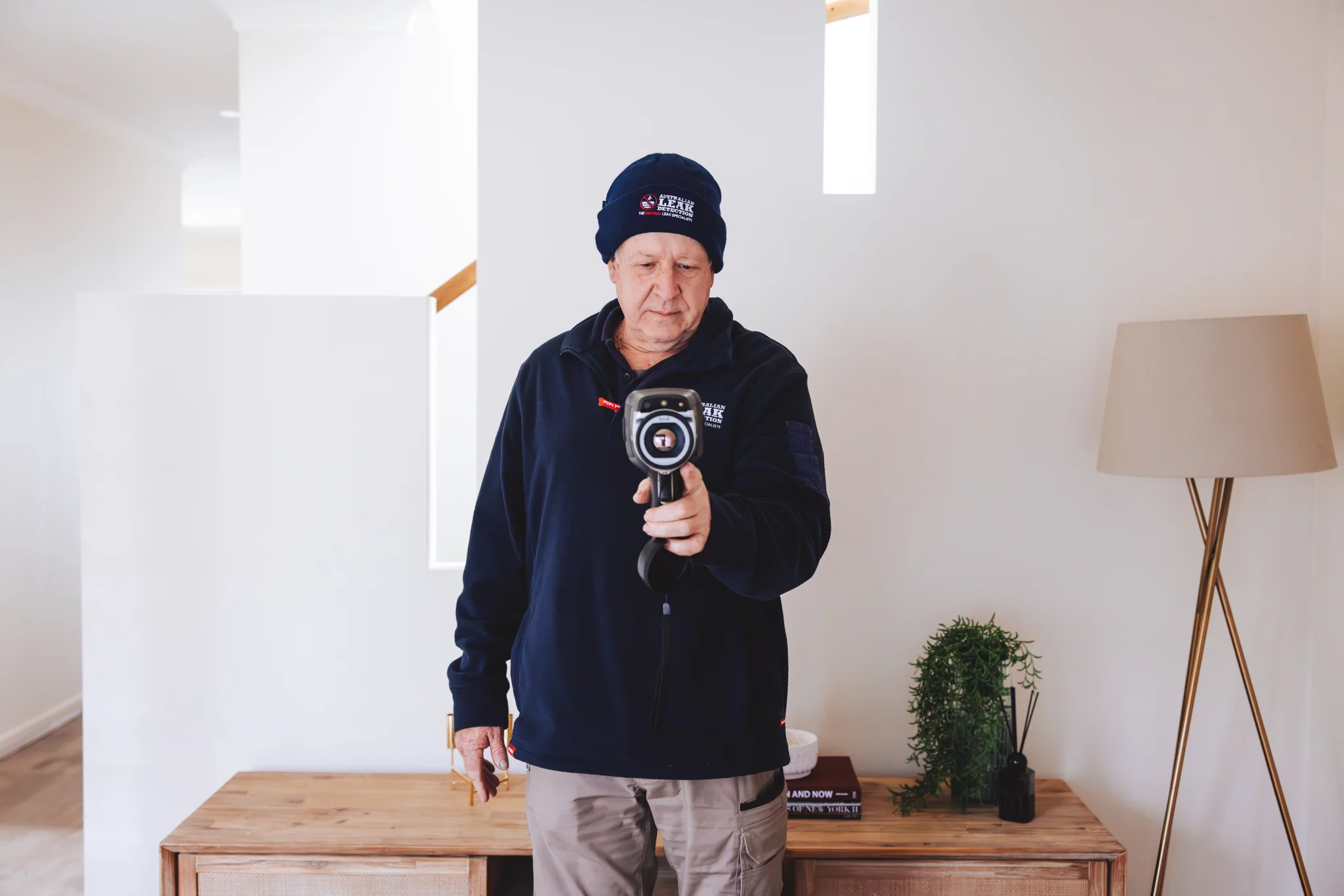
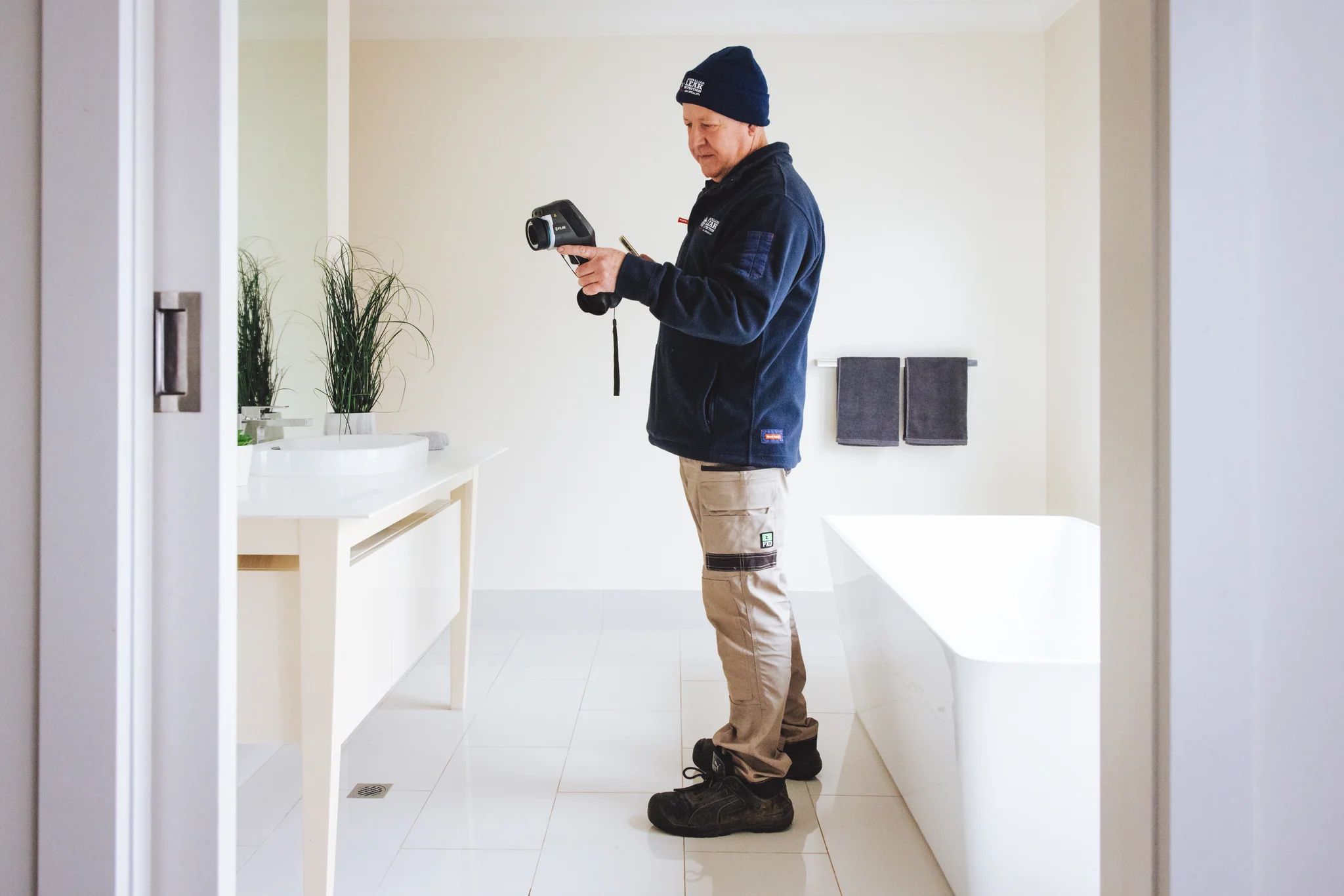
Thermal Imaging Leak Detection on site

Thermal Imaging Leak Detection

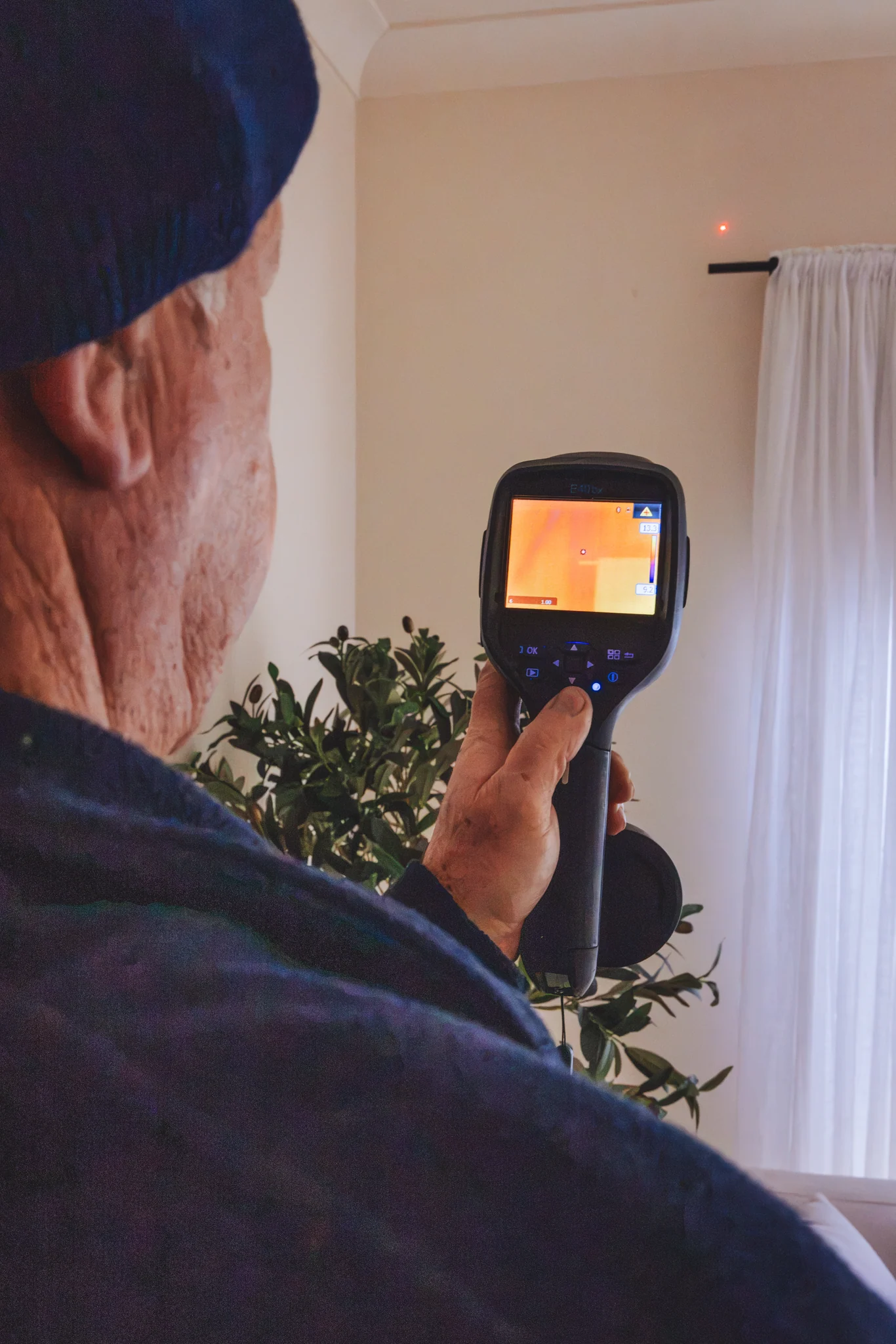
Thermal imaging, or infrared thermography, detects temperature differences caused by hidden water, moisture, cold spots, and air leaks. Because leaking water leaves a thermal signature in walls, ceilings, or floors, it can often be found before it becomes visible. ALD uses advanced thermal imaging cameras to map these patterns, pinpoint leaks other methods may miss, and provide a visual report showing where the problem is and why.

A non-contact scan used to confirm moisture, water paths, and hidden leak symptoms.

What Is Thermal Imaging for Leak Detection?

Thermal imaging is a non-contact, non-invasive method of detecting leaks and moisture by measuring infrared radiation emitted from surfaces. A thermal camera converts heat into a visible colour map. Water and moisture have distinct thermal signatures, making leaks visible even when hidden inside walls, ceilings, under floors, or below concrete.

Thermal imaging works for water leaks, moisture damage, and energy loss. It's particularly useful for detecting leaks in walls and ceilings where other methods can't reach, and for confirming the extent of moisture damage before repair begins. The camera doesn't damage anything — it just sees temperature differences.
Thermal Imaging Leak Detection inspection detail

Signs You May Have This Type of Leak

  1. You suspect a leak in a wall or ceiling but there’s no visible wet patch yet

  2. Mould is appearing in patches but you're not sure where the moisture is coming from

  3. There are wet patches around the perimeter of the feature

  4. You want to confirm the extent of moisture damage before calling a plumber

  5. A plumber suspects a leak in the roof, walls, or ceiling and needs confirmation

  6. You have damp patches that come and go depending on weather or usage

  7. You're checking the extent of water damage after a flood, burst, or leak event

  8. You want a visual record of a potential leak issue for insurance purposes

How We Use Thermal Imaging to Detect Leaks

Thermal imaging reveals what's hidden. It doesn't speculate. It shows you temperature differences and we interpret what they mean.

Pricing Guide

$495

For a thermal imaging scan.

  • Professional thermal camera scan of affected areas
  • Systematic review of walls, ceilings, floors, and building envelope
  • Annotated thermal photography for your records
  • Building plan with marked thermal anomalies
  • Written report interpreting findings and identifying probable leak sources
Get started

FAQs

  • Can thermal imaging find a leak inside a wall?

    Yes, if the wall is damaged enough to allow water to pool or seep. The thermal camera reads the temperature difference between wet and dry material. A slow, intermittent leak might not show up clearly on thermal — but a leak that's been running for days or weeks will. Your thermographer will confirm whether thermal findings are conclusive or if additional testing is needed.

  • What if the thermal images don't show anything?

    Sometimes the leak is too early-stage (just started), too dry (slow seep with little water), or not active at the time of imaging. Leaks that come and go depending on weather or usage patterns might not be active during the scan. In these cases, we'll recommend additional testing (acoustic listening, tracer gas, or repeat thermal imaging at a different time) to confirm.

  • How is thermal imaging different from visual inspection?

    A visual inspection sees what's physically visible: wet patches, mould, staining. Thermal imaging sees temperature patterns, which means it can detect moisture before it becomes visibly wet. In many cases, thermal finds leaks at an earlier stage. It also detects leaks hidden inside walls or below surfaces where visual inspection can't reach.

  • Can you use thermal imaging for energy loss or air leaks?

    Yes. Thermal imaging reveals gaps and penetrations in the building envelope that leak air. If your goal is finding water leaks, we focus on that. If you also want to identify thermal inefficiencies or air leaks, let us know and we can scan for those as well — it's the same technology, different application.

  • Is thermal imaging expensive compared to other leak detection methods?

    Thermal imaging is competitively priced and often more cost-effective than multiple other tests. If it identifies your leak immediately, you avoid the cost of additional acoustic or pressure testing. If it doesn't give a complete answer, you'll know that acoustic or tracer gas testing is the next step — and you've ruled out whole sections of the building.

Related Services

  • Water Leak Detection

    High water bill? Mysterious damp spot? Slow drip inside the walls? We use acoustic listening and tracer gas technology to locate water leaks precisely, without breaking concrete, tiles, or drywall. Full written report included, with repair guidance for your plumber.

    View Service
  • Mystery Leak Detection

    Can't figure out where the water is coming from? That's our favourite type of case. We have the full range of tools and experience to solve detection problems that others have given up on. If there's water, we'll find it.

    View Service
  • Pressure Testing

    Inert gas (nitrogen/helium) pressure testing for pipe integrity checks. We test newly installed systems, repaired lines, or existing infrastructure to confirm system integrity. Complies with AS3500 standards and provides documentary proof for councils and builders.

    View Service

What Our Clients Say

Water leaves a thermal signature

Our cameras see what your eyes can't. Book a thermal scan and we'll show you exactly what's happening inside.