Water & Pipe
Pool & External
Pressure testing is the practice of isolating a section of pipe and applying a controlled test pressure with an inert gas (typically nitrogen). If the pressure holds for a defined window, the section is intact. If it drops, the section is leaking — and the rate of drop tells us how badly.
It is a pass/fail test that produces an unambiguous result. There is no interpretation. The pipe either holds pressure or it does not.
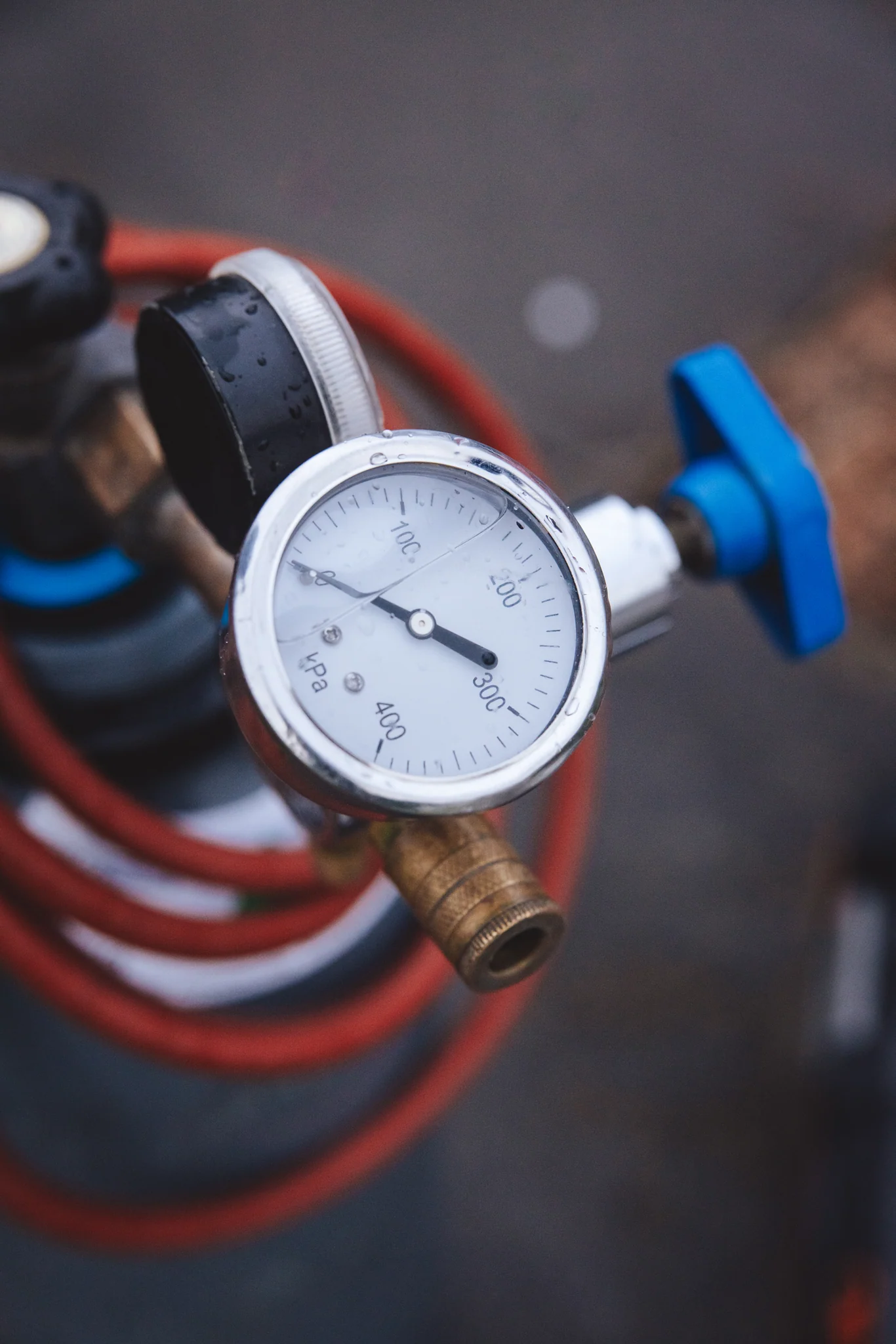
The technician isolates the section at the upstream and downstream shut-off points — either using existing valves or by capping with a calibrated witness gauge. Test gas is introduced to a target pressure (typically 600–1500 kPa, set by the relevant Australian Standard for the pipe type).
The system is left to settle, then the pressure reading is recorded over the test window — usually 15 to 60 minutes. The result is documented in the inspection report along with the test pressure, duration, and any decay observed.
Pressure testing is at its most useful in three situations: confirming that an existing buried line is or is not the source of a known leak; verifying that a recent repair has held; and grading old supply lines as part of a renovation or pre-purchase inspection.
It is the test of choice when an insurer, certifier, or council needs an objective confirmation that a section meets standard.
We deploy pressure testing as the verification step after detection — confirming that the section we've located is in fact the source of the leak, and that the rest of the line is sound. We also use it to certify completed repairs for compliance handover.
On older properties or commercial sites, a pressure test is sometimes the only practical way to grade an entire run before deciding whether to reline or replace.
Pressure testing is the most procedural-feeling part of any inspection — there's a gauge, a regulator, an isolation routine, and a recorded test window during which the technician monitors the pressure decay.
During the test the line is offline, which usually means an interruption to water supply for the duration. We coordinate timing so the interruption is brief and predictable.
A pressure test is the only piece of evidence that says "this section is sound" or "this section is not" without ambiguity. Detection finds the leak; pressure testing confirms it. Together, the two close out a job with no open questions.
For insurance burst-pipe claims, certifying pressure-test reports are standard supporting documentation. We supply a template-compliant report that meets each major insurer's requirements.
You don't need to know whether it's in the wall, underground, or under your slab. Just tell us what you've noticed, and ALD will take it from there.